


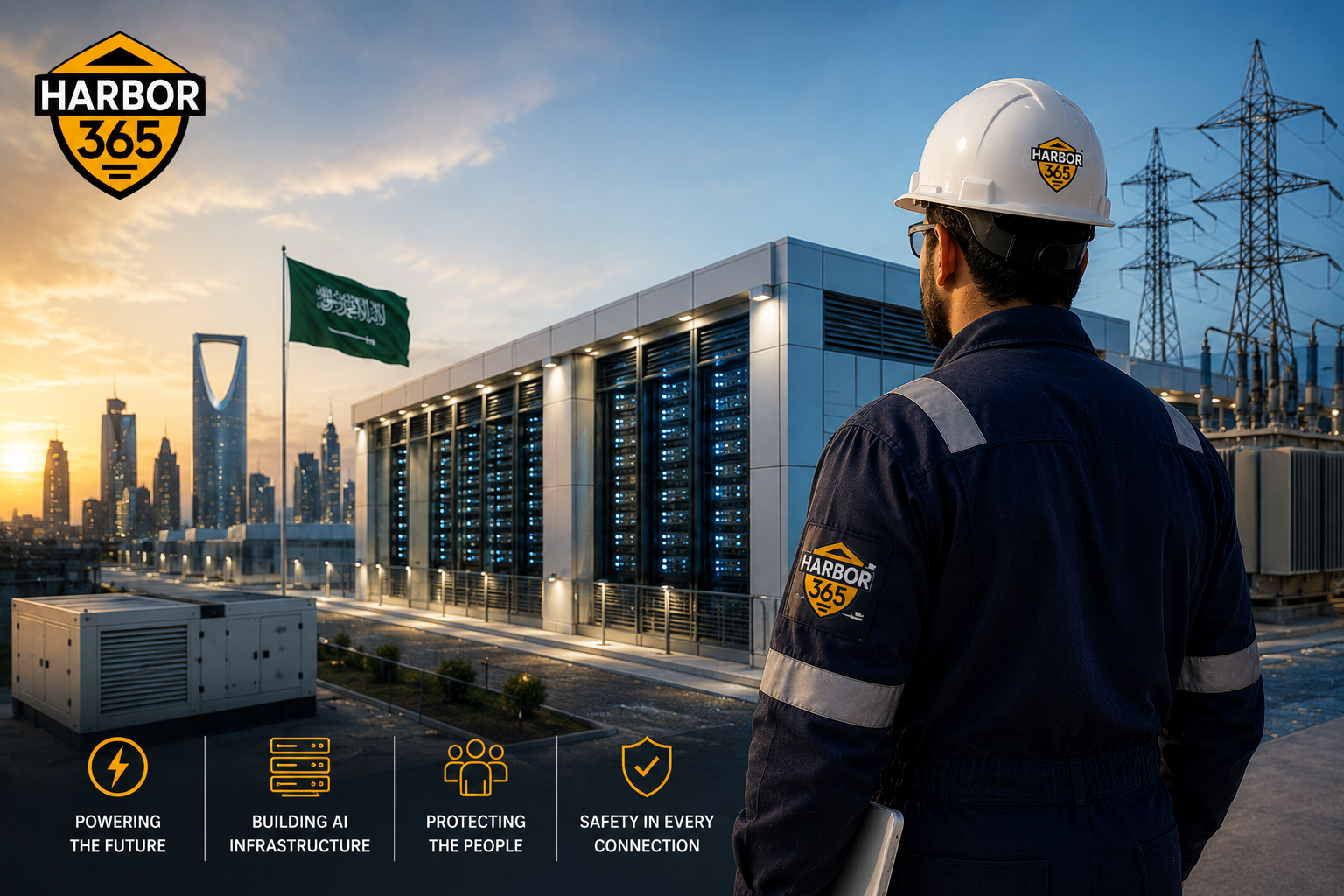
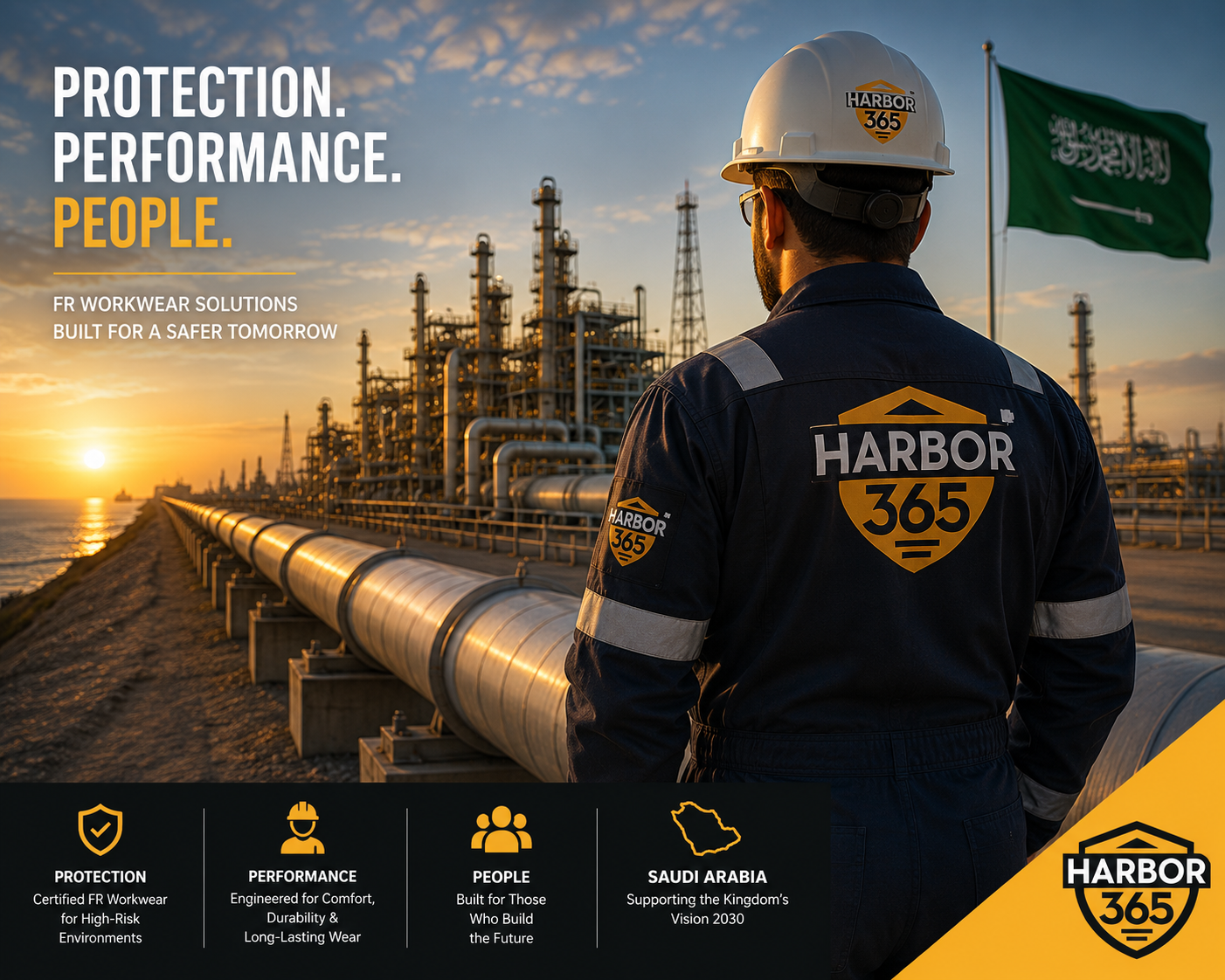

Saudi Vision 2030 Is Becoming an Industrial Story of Global Significance
When Saudi Vision 2030 is discussed internationally, attention often goes to the Kingdom’s remarkable transformation across tourism, technology, entertainment, infrastructure and major development projects.
But another transformation is taking place at the same time.
Saudi Arabia is building a significantly broader and more advanced industrial economy.
Manufacturing.
Mining.
Petrochemicals.
Automotive production.
Renewable energy.
Advanced manufacturing.
Artificial intelligence.
Industrial automation.
Logistics.
Critical infrastructure.
And behind every one of these sectors is something even more important:
People.
Engineers.
Technicians.
Operators.
Maintenance professionals.
HSE teams.
Electrical specialists.
Welders.
Contractors.
Project teams.
And thousands of professionals whose work turns national ambition into operational reality.
For Harbor365, this is where the Saudi Vision 2030 story becomes particularly meaningful.
Because as Saudi Arabia’s industrial environment evolves, the protective workwear supporting the people within those environments has an opportunity to evolve with it.
What Does Saudi Vision 2030 Mean for Industrial Growth?
Saudi Arabia’s National Industrial Strategy sets out a vision to build an agile, competitive and sustainable private-sector-led industrial economy.
Its framework goes considerably further than simply creating more factories.
The strategy identifies areas including:
- Localisation and local content
- Advanced manufacturing
- Industrial infrastructure
- Logistics
- Special Economic Zones
- Talent development
- Applied research and innovation
- Export development
- International partnerships
- World-class supply chains
This is an important distinction.
Saudi Arabia is not simply seeking more industrial production.
It is developing a more sophisticated industrial ecosystem.
The official Vision 2030 Annual Report 2025 highlights specialised industrial development across automotive manufacturing, renewable energy, pharmaceuticals, machinery and equipment, chemicals and advanced manufacturing.
Among the figures highlighted in the report are 1,490 factories in the machinery and equipment complex and 1,025 factories in specialised and inorganic chemicals.
The automotive ecosystem is also developing around manufacturers and projects involving names such as Ceer, Lucid, Hyundai and Pirelli.
This creates a powerful picture of what Saudi Arabia’s next industrial chapter could look like:
More diversified.
More technologically advanced.
More connected.
More specialised.
And increasingly supported by a highly skilled workforce.
From Traditional Factories to 4,000 Smart Factories
One of the clearest examples of this transformation is Saudi Arabia’s Future Factories Program.
The programme aims to transform approximately 4,000 factories through automation and advanced manufacturing technologies.
The Kingdom has highlighted technologies including:
Artificial intelligence.
Automation.
Robotics.
Internet of Things.
3D printing.
Digital twins.
These technologies can help industrial organisations improve productivity, quality, resource utilisation and operational efficiency.
But there is another side to the smart-factory story.
A more technologically sophisticated factory also creates a more technologically sophisticated workforce.
Automation does not eliminate the importance of people.
It changes the nature of their work.
Electrical specialists maintain increasingly sophisticated systems.
Engineers oversee automated production.
Technicians work around robotics.
Maintenance teams support complex equipment.
HSE professionals assess evolving working environments.
And specialised professionals keep highly connected facilities operating reliably.
That creates an important question for the protective workwear industry:
If the factory of the future is changing, should the workwear supporting its workforce evolve too?
At Harbor365, we believe the answer is yes.
Industrial Progress Creates an Opportunity for Workwear Innovation
Protective clothing has always had one fundamental purpose:
Provide the required protection for the identified hazard.
That principle does not change.
What can evolve is everything around it.
The materials.
The garment engineering.
The fit.
The movement.
The durability.
The lifecycle.
The wearer experience.
The ability to address multiple workplace requirements.
And the way organisations manage protective clothing across increasingly sophisticated operations.
This is where Saudi Arabia’s industrial transformation creates an exciting opportunity for the FR workwear sector.
Rather than thinking only about:
“Which FR coverall should we purchase?”
The conversation can increasingly become:
“What protective clothing system best supports this workforce, this hazard, this task and this operating environment?”
That is a much more advanced procurement conversation.
What Is FR Workwear and Why Is It Relevant to Saudi Industry?
FR commonly refers to flame-resistant workwear.
Depending on the specific garment, certification and application, flame-resistant protective clothing may be used in environments involving identified thermal hazards.
These environments can exist across industries relevant to Saudi Arabia’s transformation, including:
- Oil and gas
- Petrochemicals
- Utilities
- Electrical infrastructure
- Manufacturing
- Mining
- Metals
- Construction
- Industrial maintenance
- Renewable energy
- Critical infrastructure
However, not every industrial worker requires the same protective clothing.
That is why hazard assessment remains fundamental.
A petrochemical operator may have different requirements from an electrical technician.
A welder may have different requirements from a mining professional.
A maintenance technician working around energised equipment may have different requirements from a logistics professional.
The future of industrial workwear therefore lies increasingly in application-specific protection.
From FR Coveralls to Complete Protective Clothing Systems
The Saudi industrial workforce is diverse.
Protective clothing strategies can be diverse as well.
FR Coveralls
FR coveralls remain widely used across energy, petrochemical, utilities, maintenance and industrial operations.
They provide an integrated garment configuration that can be specified according to the required protective standard.
FR Shirts
FR shirts can form part of a properly specified two-piece protective clothing system where the relevant hazard assessment and safety programme permit this configuration.
FR Pants and Trousers
FR trousers can similarly form part of a complete certified garment system.
For procurement teams, the important consideration is not simply:
Coverall versus shirt and trousers.
It is:
Which garment configuration provides the required protection while supporting the task and working environment?
This distinction becomes increasingly valuable as Saudi Arabia develops more specialised industries and job functions.
Smart Factories Also Bring Electrical Safety Into Greater Focus
The Future Factories programme introduces another important area for protective workwear.
Automation requires electricity.
Robotics require electricity.
Advanced manufacturing equipment requires sophisticated electrical infrastructure.
Data-driven factories rely on connected electrical and control systems.
Qualified professionals performing certain activities around energised electrical equipment may therefore operate within environments where electrical hazards must be carefully assessed.
One potential hazard is an arc flash.
Where an arc-flash risk has been identified, organisations may require specialised arc-rated protective clothing as part of a broader electrical safety programme.
This brings terms such as:
ATPV
Arc Rating
CAT 2
CAT 4
IEC 61482
into the protective clothing conversation.
This is particularly relevant for Harbor365 because these are areas where the brand is already building substantial search visibility and educational content.
The connection between Saudi smart manufacturing and arc-rated workwear therefore represents an important future content and product opportunity.
Saudi Arabia’s Industrial Transformation Is Happening Across Multiple Cities
One of the most important aspects of Vision 2030 is that industrial development is not restricted to one location.
Saudi Arabia’s official Vision 2030 material identifies industrial cities across the Kingdom, including locations around:
Riyadh
Dammam
Jeddah
Jazan
Al-Ahsa
Rabigh
Madinah
Tabuk
Qassim
and numerous other regions.
For Harbor365, this is why a city-specific Saudi strategy is important.
Different industrial cities have different characteristics.
Jubail: Petrochemicals, Chemicals and Advanced Industry
Jubail represents one of the most important industrial environments in the Kingdom.
Its industrial ecosystem includes petrochemicals, chemicals, manufacturing and supporting industrial services.
The Vision 2030 Annual Report highlights a Specialized and Inorganic Chemicals Complex in Jubail associated with a base of 1,025 factories.
For protective workwear, this creates relevance around topics such as:
- FR clothing
- Chemical protective workwear
- FR coveralls
- Anti-static clothing
- Industrial uniforms
- Welding protection
- Maintenance workwear
- Contractor PPE
This is why Jubail should become a major Harbor365 content cluster rather than simply one location page.
Yanbu: An Industrial Ecosystem With SAR 314 Billion in Investment
Yanbu provides another remarkable example of Saudi Arabia’s industrial scale.
According to the Saudi Press Agency in June 2026, Yanbu Industrial City has 158 operational factories and industrial facilities, with total industrial investment reaching approximately SAR 314.19 billion.
Its industrial ecosystem includes:
- Refining
- Petrochemicals
- Energy
- Advanced manufacturing
- Synthetic fibres
- Steel
- Glass
- Lubricants
- International logistics
Its Red Sea location also gives Yanbu an important role within international trade and supply chains.
For Harbor365, Yanbu creates natural relevance around FR workwear for refinery, petrochemical, maintenance, energy and manufacturing professionals.
Dammam and the Eastern Region: Where Energy Meets Advanced Manufacturing
Dammam and the wider Eastern Region remain central to Saudi Arabia’s industrial landscape.
Vision 2030 reporting highlights machinery and equipment manufacturing activity in Dammam, while the broader Eastern Province is deeply connected with energy, petrochemicals, utilities, logistics and industrial services.
This creates another important opportunity for specialised workwear content around:
FR clothing Dammam
FR coveralls Dammam
Arc flash clothing Dammam
Oil and gas workwear Dammam
Industrial workwear Eastern Province
Rather than using city names simply for SEO, the objective should be to create genuinely useful information around the industries operating in each location.
Jazan: Industry and Human Capital Growing Together
Jazan presents another exciting Vision 2030 story.
In July 2026, the Royal Commission for Jubail and Yanbu reported new developments supporting industrial investment in Jazan City for Primary and Downstream Industries, including a partnership aimed at strengthening the aluminium industry.
Importantly, the same update highlighted initiatives supporting the training and development of Saudi youth.
That combination matters.
Industry.
Investment.
Technology.
Education.
Skills.
People.
This is exactly what industrial transformation should represent.
And it reinforces an important Harbor365 belief:
Industrial progress is strongest when infrastructure and human capability advance together.
Protective workwear forms one small but meaningful part of the ecosystem supporting those people.
Saudi Arabia’s Industrial Cities Are Attracting Significant Investment
The wider numbers are equally impressive.
The Royal Commission for Jubail and Yanbu reported in May 2026 that total investment across its cities had exceeded SAR 1.5 trillion.
Of this, industrial investment exceeded SAR 1.2 trillion, while the number of industrial facilities had reached 839.
These figures illustrate the scale of the ecosystem developing around Saudi industrial cities.
But they also tell another story.
Every new industrial facility ultimately creates activity involving people.
Construction.
Commissioning.
Operations.
Electrical systems.
Maintenance.
Engineering.
Inspection.
Logistics.
Safety.
Procurement.
This is why Harbor365 sees Saudi Vision 2030 not simply as an economic transformation.
We see it as a workforce transformation.
The People Behind Vision 2030
Large national strategies are often communicated through impressive numbers.
Billions invested.
Factories opened.
Infrastructure completed.
Production increased.
New technologies deployed.
But numbers do not build factories.
People do.
People install the machinery.
People commission the equipment.
People maintain electrical systems.
People inspect facilities.
People operate plants.
People solve problems.
People keep essential systems working.
And people turn ambitious plans into everyday operational reality.
As a protective workwear brand, Harbor365 believes this human side of Vision 2030 deserves recognition.
Because ultimately, our industry exists for those people.
Saudi Arabia’s Climate Adds Another Dimension to Workwear
The Kingdom’s industrial environment also presents climatic considerations.
Where work takes place outdoors or across mixed environments, high temperatures can influence the overall working experience.
Saudi Arabia has already demonstrated a structured approach to workforce wellbeing through seasonal measures addressing outdoor work during periods of intense summer heat.
For protective clothing development, this creates an opportunity to consider how:
Protection
can work alongside
Wearability
which can work alongside
Mobility
which can work alongside
Garment engineering
while maintaining the protection required for the hazard.
Comfort must never replace compliance.
But once the required protection is established, improving the wearer’s experience is a valuable direction for innovation.
Fabric Innovation Can Play a Role
Different FR garments use different fibre technologies and fabric constructions.
Some flame-resistant properties are inherent to the fibre.
Other protective characteristics may be achieved through treatment.
Different combinations can deliver different performance characteristics.
This is one reason Harbor365 continues exploring solutions that balance protection with wearer-focused garment engineering.
The Harbor365 Quill range, for example, incorporates Lenzing FR fibres within its fabric composition.
For demanding environments such as Saudi Arabia and the wider GCC, the objective is to continue exploring how protective performance and wearer considerations can work together.
The important question is never simply:
“Which fibre is used?”
It should be:
“What does the complete garment deliver for the worker, hazard and operating environment?”
Vision 2030 and the Future of FR Workwear
Saudi Arabia’s industrial transformation provides an excellent glimpse into where industrial work itself is heading.
Smart factories.
Automation.
AI.
Advanced manufacturing.
New mining operations.
Renewable energy.
More sophisticated electrical infrastructure.
Integrated supply chains.
Higher-skilled workforces.
These developments create new possibilities for the protective clothing industry.
The future may involve workwear that becomes:
More application-specific.
More technically engineered.
More wearer-focused.
More sustainable.
Better integrated with workforce management systems.
Better adapted to different climates and working environments.
The industrial transformation taking place in Saudi Arabia therefore provides inspiration beyond the Kingdom itself.
It shows what happens when infrastructure, technology, investment and people move forward together.
Frequently Asked Questions About Saudi Vision 2030 and FR Workwear
1. What is Saudi Vision 2030?
Saudi Vision 2030 is the Kingdom’s long-term national transformation framework focused on economic diversification, societal development and building a more sustainable and competitive economy.
2. How is Vision 2030 changing Saudi Arabia’s industrial sector?
The transformation includes industrial diversification, localisation, advanced manufacturing, smart factories, mining development, logistics, industrial infrastructure, technology adoption and workforce development.
3. What is Saudi Arabia’s National Industrial Strategy?
The National Industrial Strategy aims to build an agile, competitive and sustainable private-sector-led industrial economy, supported by localisation, advanced manufacturing, innovation, talent, industrial infrastructure and world-class supply chains.
4. What is Saudi Arabia’s Future Factories Program?
The Future Factories Program aims to transform approximately 4,000 factories through automation and Fourth Industrial Revolution technologies.
5. What technologies are being introduced into Saudi smart factories?
Technologies being discussed and adopted include artificial intelligence, robotics, automation, IoT, digital twins, advanced manufacturing systems and 3D printing.
6. Why is FR workwear relevant to Saudi Vision 2030?
Many industries expanding under Saudi Arabia’s industrial transformation involve working environments where identified thermal, electrical or other hazards may require specialised protective clothing.
7. What does FR clothing mean?
FR generally refers to flame-resistant clothing designed to help protect workers against identified thermal hazards when appropriately selected and used.
8. What does FRC mean?
FRC is commonly used as an abbreviation for flame-resistant clothing.
9. What industries in Saudi Arabia may use FR clothing?
Depending on hazard assessment, FR clothing may be relevant across oil and gas, petrochemicals, utilities, manufacturing, mining, metals, electrical operations, maintenance and other industrial sectors.
10. Are FR coveralls commonly used in Saudi Arabia?
FR coveralls are commonly associated with industrial sectors where flame-resistant protection is required. Selection should always depend on the identified hazard and applicable standard.
11. Can industrial workers use FR shirts and FR pants?
Where permitted by the relevant safety programme and certification requirements, FR shirts and trousers can form part of an appropriate two-piece protective clothing system.
12. What is arc-flash clothing?
Arc-rated clothing is protective clothing specifically evaluated for exposure to thermal energy generated by an electrical arc.
13. What does ATPV mean?
ATPV stands for Arc Thermal Performance Value and is one measure used to express the arc rating of protective materials or garments.
14. What is CAT 2 arc-flash clothing?
Within the applicable NFPA 70E framework, PPE Category 2 is associated with arc-rated clothing having a minimum arc rating of 8 cal/cm².
15. Is all FR clothing arc-rated?
No. A garment being flame resistant does not automatically mean it has been tested and rated for electrical arc exposure.
16. Which Saudi cities are important for industrial workwear?
Major industrial activity exists across locations including Riyadh, Jubail, Dammam, Dhahran, Ras Tanura, Khobar, Yanbu, Jeddah, Jazan and other Saudi industrial cities.
17. Why is Jubail important for FR workwear?
Jubail has a substantial petrochemical, chemical and manufacturing ecosystem, creating a broad range of industrial job functions and protective clothing requirements.
18. Why is Yanbu an important industrial location?
Yanbu Industrial City hosts refining, petrochemical, energy, advanced manufacturing and logistics activities. Saudi authorities reported approximately SAR 314.19 billion in industrial investment there in 2026.
19. How should companies choose FR workwear in Saudi Arabia?
Selection should begin with the hazard assessment, followed by the required standard, protection level, worker task, operating environment, garment configuration, compatibility with other PPE and lifecycle requirements.
20. How is Harbor365 supporting Saudi Arabia’s industrial workforce?
Harbor365 is developing protective workwear solutions and Saudi-specific knowledge resources around industries, hazards, standards and operating environments across the Kingdom.
The Future Is Being Built Now
Vision 2030 is often described through the future Saudi Arabia wants to create.
But perhaps the most exciting part of the story is that much of that future is already being built.
Inside factories.
Across industrial cities.
Within mines.
At energy facilities.
Through technology centres.
Across logistics networks.
And through the skills of Saudi Arabia’s rapidly evolving workforce.
At Harbor365, we see tremendous opportunity to evolve alongside this journey.
Not simply by supplying another garment.
But by continuing to understand the industries, hazards, climates, standards and—above all—the people behind Saudi Arabia’s industrial transformation.
Because Vision 2030 is ultimately not only about infrastructure.
It is about capability.
It is about people.
It is about progress.
And the people building that progress deserve protective workwear that continues progressing with them.
Harbor365 — Evolving protection for the people powering industrial progress.