



Egypt is rapidly emerging as a key industrial and infrastructure hub in the Middle East and North Africa (MENA) region. With significant investments in oil & gas, power generation, construction, and manufacturing, the demand for high-performance safety solutions is increasing at an equally fast pace. Among these, Flame-Resistant (FR) workwear is becoming a critical requirement rather than an optional safety measure.
The Growing Need for FR Workwear in Egypt
Industrial sectors in Egypt often operate in environments where workers are exposed to flash fires, arc flash incidents, extreme heat, and hazardous chemicals. Traditional workwear cannot withstand these risks, making certified protective clothing essential.
Several factors are driving the demand for FR clothing in Egypt:
- Expansion of Oil & Gas Projects: Refineries, drilling sites, and petrochemical plants expose workers to high fire risks.
- Power & Electrical Infrastructure Growth: Increased risk of arc flash incidents requires certified arc-rated garments.
- Global Safety Compliance: International contractors and EPC companies mandate compliance with standards such as IEC and NFPA.
- Harsh Climate Conditions: Egypt’s high temperatures demand breathable yet protective fabrics.
As safety regulations tighten and awareness increases, industries are shifting towards certified FR garments that provide both protection and comfort.
Types of Protective Wear Required in the Egyptian Market
To address the diverse industrial landscape, different types of FR workwear are in demand:
1. FR Coveralls (One-Piece Suits)
Widely used in oil & gas and refinery environments, coveralls provide full-body protection against flash fire hazards.
2. Two-Piece FR Workwear (Shirts & Trousers)
Preferred in sectors requiring flexibility and mobility, such as construction and maintenance operations.
3. Arc Flash Protective Clothing (CAT 2 and above)
Essential for workers in electrical environments where arc flash incidents can occur.
4. Lightweight FR Cotton & Blended Fabrics
Ideal for Egypt’s hot climate, ensuring breathability without compromising safety.
5. Chemical-Resistant Outerwear
Used in specialized industrial zones where workers are exposed to hazardous substances.
Why Climate-Suitable FR Clothing Matters
One of the biggest challenges in Egypt is balancing protection with comfort. Heavy or non-breathable protective gear often leads to discomfort, reduced productivity, and even non-compliance among workers.
Modern FR clothing addresses this issue by offering:
- Lightweight and breathable fabrics
- Moisture management for hot environments
- Durability for long working hours
- Ergonomic design for ease of movement
This ensures that workers remain protected without compromising efficiency.
Harbor365: Designed for Real Industrial Conditions
Harbor365 has developed its FR workwear range keeping in mind the demanding conditions of regions like Egypt and the broader MENA market.
Key strengths include:
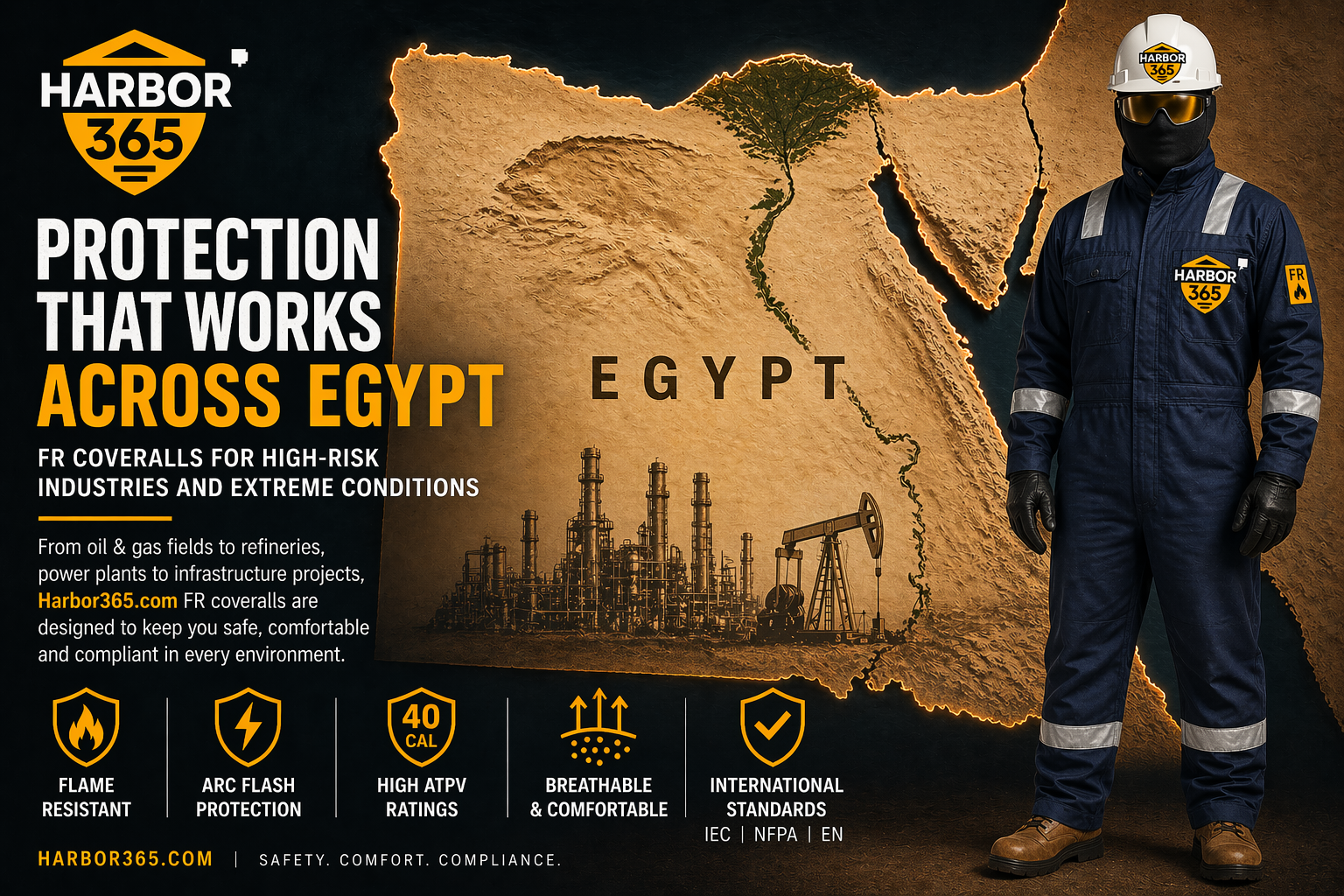
- Compliance with international safety standards such as IEC 61482, NFPA, and EN norms
- Arc-rated garments (including high ATPV ratings) suitable for high-risk environments
- Climate-optimized fabrics designed for hot and humid conditions
- Durable construction for long-term industrial usage
- Proven experience across MENA and GCC markets
Rather than offering generic solutions, the focus is on practical performance in real-world working environments.
The Future of Industrial Safety in Egypt
As Egypt continues to industrialize, safety standards are expected to become more stringent. Companies operating in the region will increasingly prioritize:
- Certified PPE procurement
- Worker safety training
- Compliance with global safety benchmarks
- Investment in long-lasting protective gear
FR workwear will play a central role in this transformation, acting as a first line of defense against workplace hazards.
Conclusion
Egypt’s industrial growth presents immense opportunities, but it also brings heightened responsibility toward workforce safety. Flame-resistant workwear is no longer a secondary consideration—it is a critical investment in human safety and operational continuity.
Organizations that adopt high-quality, climate-appropriate, and certified FR clothing will not only meet compliance requirements but also enhance productivity, reduce risks, and build a safer working environment.
If your operations are based in Egypt or expanding into the region, now is the time to evaluate whether your workforce is equipped with the right level of protection