


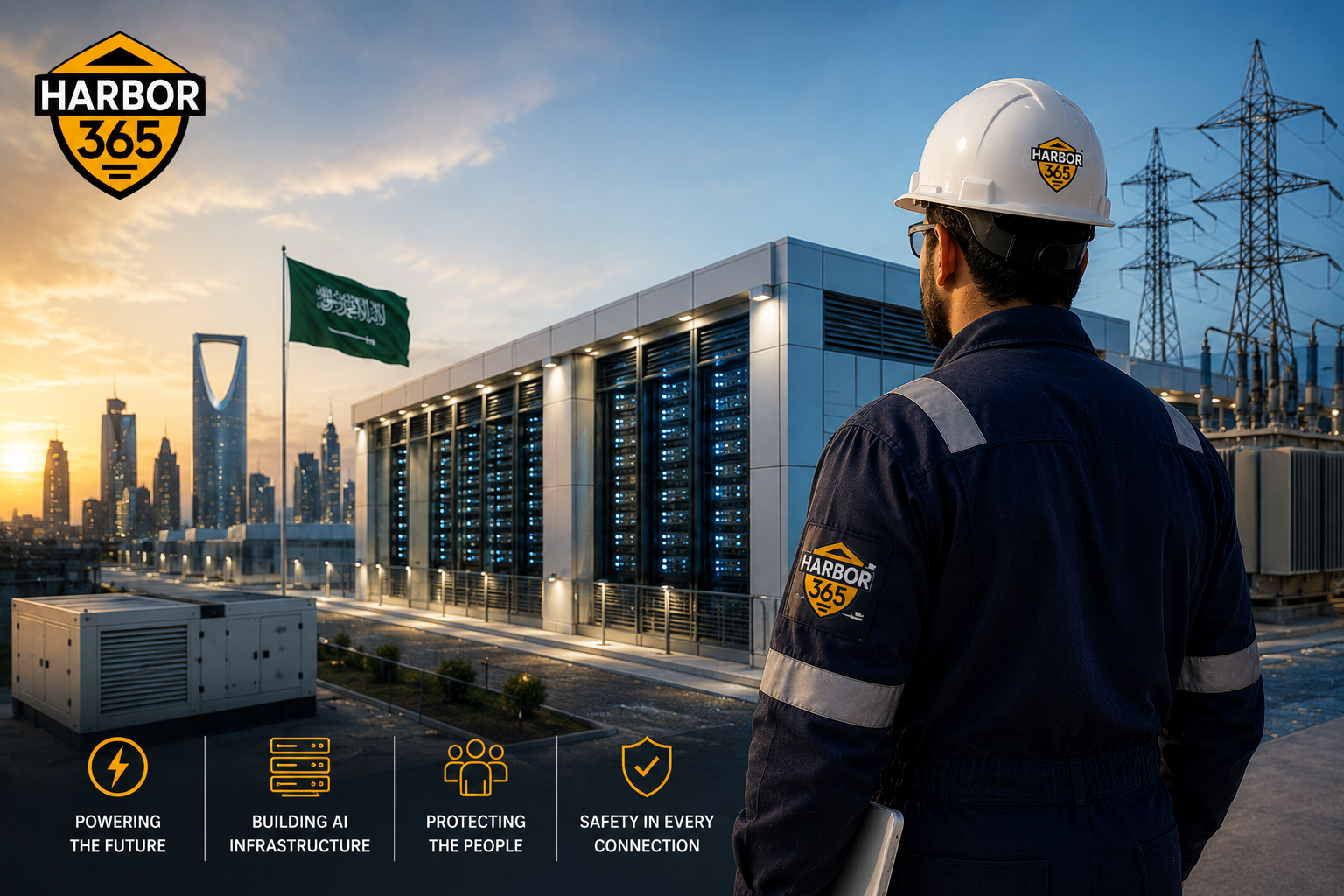
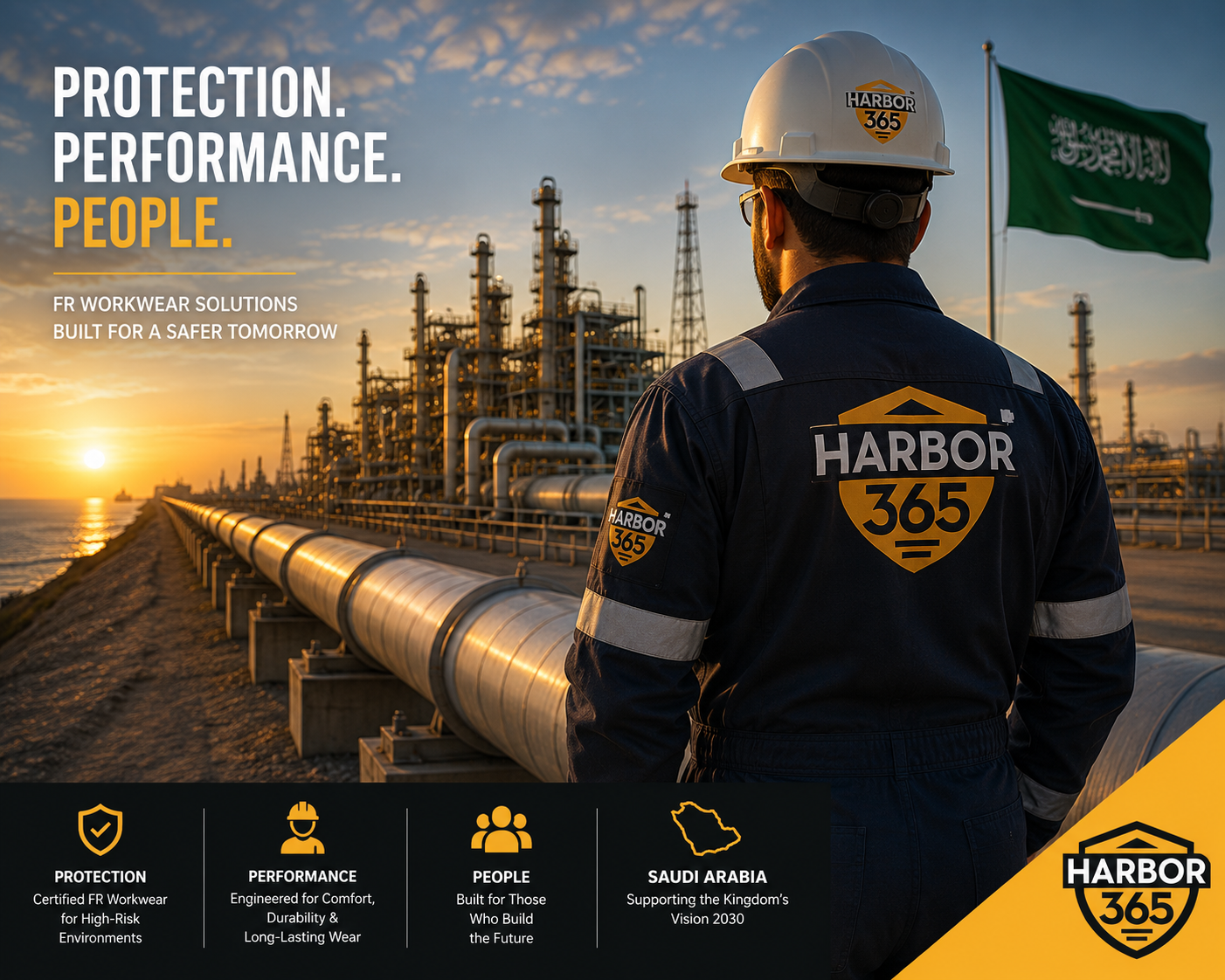

When We Think About Artificial Intelligence, We Rarely Think About the People in Protective Workwear
Artificial intelligence is usually presented as something almost invisible.
Algorithms. Cloud computing. Large language models. Digital assistants. Advanced applications.
But every AI system ultimately depends on something very physical.
Buildings. Electricity. Cooling. Servers. Networks. Power distribution. Backup systems.
And the skilled people who build, operate and maintain them.
Saudi Arabia is rapidly developing this physical foundation for its digital future.
The Kingdom’s AI ambitions are increasingly being supported by investments in advanced data centers, cloud infrastructure and high-performance computing capacity.
One of the most significant developments has been the emergence of HUMAIN, the Public Investment Fund-backed AI company created to build an integrated AI ecosystem spanning next-generation data centers, cloud infrastructure, AI models and applications.
Saudi Arabia’s official Vision 2030 platform describes HUMAIN as an initiative dedicated to developing an integrated AI-powered digital ecosystem that includes advanced data centers and cloud computing infrastructure. The Saudi Press Agency has similarly described the initiative as part of the Kingdom’s move from simply adopting technology toward developing integrated AI capabilities locally.
The scale of the wider transformation is also becoming increasingly visible.
In April 2026, Saudi Arabia’s Ministry of Communications and Information Technology stated that the Kingdom hosted more than 60 data centers developed by over 20 companies, with investments exceeding SAR 16 billion.
S&P Global has projected that Saudi Arabia’s data center capacity could expand at an average annual growth rate of approximately 29% through 2030, supported by Vision 2030 initiatives, AI investment and the Kingdom’s energy resources.
And in January 2026, Reuters reported a financing agreement of up to $1.2 billion between Saudi Arabia’s National Infrastructure Fund and HUMAIN to support the development of up to 250 megawatts of AI data center capacity.
These are impressive numbers. But there is another story behind them.
The AI revolution is also becoming an industrial infrastructure revolution.
And industrial infrastructure requires people.
The Cloud Is Not Actually in the Sky
The term “cloud computing” can make digital infrastructure feel weightless.
It is not.
The cloud exists inside highly engineered physical environments.
A modern data center can depend on an extensive ecosystem of:
- Electrical distribution systems
- Switchgear
- Transformers
- Uninterruptible power supplies
- Backup power systems
- Cooling infrastructure
- Fire detection and suppression systems
- Network infrastructure
- Mechanical systems
- Security systems
- Control rooms
- Maintenance facilities
Behind those systems are people.
Electrical engineers.
Technicians.
Facilities professionals.
Maintenance teams.
Commissioning specialists.
Construction professionals.
HSE teams.
Contractors.
Operations teams.
Emergency-response personnel.
The more AI infrastructure Saudi Arabia develops, the more important this physical ecosystem becomes.
The story of AI therefore does not begin only with software developers writing code.
It also begins with the people who make sure the infrastructure behind that code can operate reliably.
Saudi Arabia Is Building More Than Data Centers
The development of data centers can create a much wider industrial ecosystem.
Before a data center processes its first AI workload, it must be:
Designed. Engineered. Constructed. Energised. Commissioned. Tested.
And after it becomes operational, it must be continuously:
Monitored. Maintained. Upgraded. Protected.
This creates activity across engineering, electrical systems, construction, utilities, cooling, facilities management, telecommunications and industrial services.
That is why Saudi Arabia’s AI journey is relevant not only to the technology sector.
It is also relevant to the industrial workforce.
As the Kingdom develops increasingly sophisticated digital infrastructure, the systems supporting the people working around that infrastructure can evolve alongside it.
This includes training.
Procedures.
Hazard assessment.
Engineering controls.
Emergency preparedness.
And, where the identified hazards require it, appropriately selected personal protective equipment and protective clothing.
Why Electrical Safety Matters in Data Center Environments
Data centers are highly controlled facilities.
That does not mean every role inside a data center requires FR or arc-rated clothing.
Protective clothing should always be selected according to a proper hazard assessment, the task being performed and the applicable safety requirements.
However, certain electrical activities may involve exposure to electrical hazards that require specialised protective systems.
For qualified personnel working on or around certain energised electrical equipment, one potential hazard is an arc flash.
An arc flash is a rapid release of energy caused by an electrical fault.
The thermal energy generated by an arc-flash event can be extremely intense.
This is why electrical safety programmes may involve multiple layers of protection, including:
- Engineering controls
- Equipment design
- Safe working procedures
- De-energisation where appropriate
- Risk assessment
- Training
- Restricted work practices
- Task-specific PPE
- Arc-rated protective clothing
The objective is not simply to put a worker in a protective garment.
The objective is to create a complete system of risk management.
Protective clothing forms one part of that system.
FR Clothing and Arc-Rated Clothing Are Not Automatically the Same Thing
This is an important distinction for procurement teams.
The terms FR clothing and arc-rated clothing are sometimes used interchangeably.
They should not always be treated as identical.
Flame-resistant clothing
FR clothing is designed to resist ignition and help reduce the continuation of burning after exposure to certain thermal hazards, depending on the garment and applicable standard.
Arc-rated clothing
Arc-rated clothing is specifically evaluated for exposure to electrical arc energy.
An arc-rated garment may carry an arc rating, commonly expressed in calories per square centimetre.
One commonly discussed measure is:
ATPV — Arc Thermal Performance Value
ATPV represents a measured level of incident energy associated with a defined probability of a second-degree burn under specific test conditions.
For electrical work, garment selection should therefore be based on the actual hazard assessment and the required level of protection.
This is particularly important as data center infrastructure becomes larger, more power-dense and increasingly critical.
AI May Be Digital, but Its Energy Requirements Are Very Real
The physical demands of AI infrastructure are increasing.
AI workloads can require significant computing power.
That computing power requires electricity.
Electricity requires increasingly sophisticated infrastructure.
And sophisticated infrastructure requires skilled people to build, operate and maintain it.
This creates an important connection between two industries that may initially appear very different:
Artificial intelligence
and
Industrial workforce protection.
As Saudi Arabia develops its position in AI, the supporting infrastructure will increasingly bring together professionals from:
- Technology
- Electrical engineering
- Utilities
- Construction
- Facilities management
- Cooling and mechanical systems
- Industrial maintenance
- Safety and compliance
The protective clothing industry therefore has an opportunity to understand the requirements of this emerging workforce more deeply.
The question should not be:
“Can we sell traditional industrial workwear to a data center?”
The better question is:
“What are the actual tasks, hazards and operating conditions of the people building and maintaining next-generation digital infrastructure?”
That distinction matters.
The Future of Workwear Should Follow the Future of Work
Industrial workwear has historically been strongly associated with sectors such as:
- Oil and gas
- Petrochemicals
- Utilities
- Manufacturing
- Mining
- Heavy industry
Those sectors remain extremely important.
But the definition of critical infrastructure is expanding.
Today, a data center can be as strategically important to an economy as many traditional physical assets.
Banking systems depend on digital infrastructure.
Healthcare systems depend on it.
Government services depend on it.
Telecommunications depend on it.
Artificial intelligence depends on it.
Businesses depend on it.
As the infrastructure landscape changes, protective clothing manufacturers and suppliers should be prepared to understand new environments.
At Harbor365, we believe this is part of the future of industrial workwear.
The objective is not to assume that every emerging industry needs the same garment.
It is to understand the environment first.
Then the hazard.
Then the task.
Then the standard.
Then the wearer.
And only then the appropriate protective clothing solution.
What Should Data Center Operators and Contractors Consider When Evaluating Protective Workwear?
A structured approach can begin with several questions.
1. What task is being performed?
Routine facility inspection is different from electrical maintenance.
Construction is different from commissioning.
Emergency response is different from normal operations.
The task matters.
2. What is the identified hazard?
Potential considerations may include:
- Electrical arc exposure
- Thermal hazards
- Static-related requirements
- Visibility
- Mechanical risks
- Environmental conditions
The garment should follow the hazard assessment.
3. What standard is required?
Protective clothing should be selected according to the relevant standard and the organisation’s safety programme.
For arc-flash protection, the required garment performance should align with the identified incident energy or applicable PPE approach.
4. How does the garment interact with other PPE?
A protective clothing system may need to work alongside:
- Helmets
- Face protection
- Gloves
- Safety footwear
- Hearing protection
- Harnesses
- Other task-specific equipment
The complete system matters.
5. How often will the garment be worn?
A garment used for a short specialist task may have different practical requirements from one worn regularly during maintenance activities.
Wear duration should be considered alongside protection.
6. What is the operating environment?
Saudi Arabia’s climate can add another consideration, particularly where work takes place outdoors or across mixed indoor and outdoor environments.
The objective remains to achieve the required protection while considering the real environment in which the workforce operates.
From Oil Infrastructure to AI Infrastructure: The Workforce Remains Essential
Saudi Arabia has built extraordinary capabilities in energy.
Today, the Kingdom is also building capabilities in:
- Artificial intelligence
- Cloud computing
- Digital infrastructure
- Advanced manufacturing
- Renewable energy
- Smart cities
The technologies may change.
The industries may evolve.
The infrastructure may become increasingly digital.
But one principle remains constant:
Progress still depends on people.
Someone builds the facility.
Someone installs the electrical system.
Someone commissions the equipment.
Someone performs the maintenance.
Someone responds when a system requires attention.
Someone keeps the infrastructure operating.
The future may be powered by artificial intelligence.
But that future will still be built and maintained by human capability.
Harbor365’s Perspective: Protective Workwear Should Evolve With Industry
At Harbor365, we see the expansion of Saudi Arabia’s AI and data center ecosystem as part of a much larger transformation.
It represents the emergence of new industrial environments.
New workforce requirements.
New procurement conversations.
And new opportunities for the protective clothing sector to learn and evolve.
Our approach remains centred on a simple principle:
Understand the hazard. Understand the environment. Understand the wearer. Then develop the appropriate solution.
As Saudi Arabia continues developing its digital economy, the physical infrastructure behind that transformation will become increasingly important.
And as that infrastructure grows, the wider ecosystem supporting the people who build, operate and maintain it can grow alongside it.
Because the future of AI is not only about faster processors.
It is also about resilient infrastructure.
Reliable energy.
Engineering excellence.
Skilled professionals.
And people who are properly prepared for the work they perform.
The intelligence may be artificial.
The infrastructure is real.
And the people behind it matter.
Frequently Asked Questions
1. Why is Saudi Arabia investing in AI and data centers?
Saudi Arabia is developing AI and digital infrastructure as part of its broader economic transformation. The Kingdom is building capabilities across data centers, cloud computing, AI models and applications, with initiatives such as HUMAIN supporting the development of an integrated AI ecosystem.
2. How many data centers does Saudi Arabia have?
Saudi Arabia’s Ministry of Communications and Information Technology stated in April 2026 that the Kingdom hosted more than 60 data centers developed by over 20 companies, with investments exceeding SAR 16 billion.
3. How fast is Saudi Arabia’s data center sector growing?
S&P Global projected approximately 29% average annual growth in data center capacity through 2030, driven by AI investment, Vision 2030 initiatives and other factors.
4. What is HUMAIN?
HUMAIN is a Saudi AI company backed by the Public Investment Fund. Its focus includes an integrated AI ecosystem spanning advanced data centers, cloud infrastructure, AI models and applications.
5. Why do AI systems require data centers?
AI models require substantial computing resources to train, operate and serve users. Data centers provide the physical computing, networking, power and cooling infrastructure that supports these workloads.
6. Are data centers industrial environments?
Data centers combine digital technology with significant physical infrastructure, including electrical distribution, cooling, backup power and facility systems.
While the risks differ from traditional heavy industry, specific construction, commissioning and maintenance activities may involve occupational hazards requiring specialised controls and PPE.
7. Does every data center worker need FR clothing?
No.
Protective clothing should be selected according to the worker’s actual task, hazard assessment and applicable safety requirements.
Not every person working in or visiting a data center requires FR or arc-rated clothing.
8. What is arc-rated clothing?
Arc-rated clothing is protective clothing specifically evaluated for exposure to thermal energy from an electrical arc.
The garment’s arc rating helps inform appropriate selection within an electrical safety programme.
9. What does ATPV mean?
ATPV stands for Arc Thermal Performance Value.
It is one method used to express the arc rating of protective materials or clothing and is typically stated in calories per square centimetre.
10. What is CAT 2 arc-flash clothing?
CAT 2 generally refers to an arc-flash PPE category associated with a minimum arc rating of 8 cal/cm² under the relevant NFPA 70E framework.
The appropriate PPE should always be determined through the applicable electrical safety programme and hazard assessment.
11. Is all FR clothing arc-rated?
No.
A garment being flame resistant does not automatically mean it has been evaluated and rated for electrical arc exposure.
For arc-flash applications, procurement teams should verify the garment’s specific arc rating and applicable certification.
12. What types of professionals may require specialised PPE in a data center?
Depending on their tasks and identified hazards, this may include certain:
- Electrical technicians
- Maintenance professionals
- Commissioning specialists
- Contractors
- Facilities engineers
- Emergency-response personnel
Requirements should always be task and hazard specific.
13. Why is garment comfort relevant in electrical protective clothing?
Where protective clothing is worn regularly or for extended tasks, garment fit, movement, fabric construction and overall wearability can affect the wearer experience.
Comfort should never replace the required protective performance, but it can be considered alongside protection when selecting an appropriate garment system.
14. How can procurement teams select workwear for data center operations?
A useful process is to evaluate:
- The task
- The hazard
- The required standard
- The required protection level
- The operating environment
- Compatibility with other PPE
- Wearer requirements
- Care and maintenance
This creates a more structured approach than selecting garments by product category alone.
15. How is Harbor365 relevant to the data center sector?
Harbor365 develops protective workwear for demanding industrial and technical environments.
As data centers become increasingly important pieces of critical infrastructure, Harbor365 is expanding the conversation around how appropriate FR and arc-rated clothing can support professionals performing identified high-risk electrical and industrial tasks.
Conclusion: The Future Is Digital. The Infrastructure Is Physical.
Saudi Arabia’s AI journey is one of the most exciting transformation stories taking place today.
But behind every AI model is a data center.
Behind every data center is an electrical and mechanical infrastructure ecosystem.
And behind that infrastructure are people.
Saudi Arabia is not simply adopting artificial intelligence.
It is developing the physical and digital foundations required to participate in shaping its future.
For the industrial workwear sector, that creates an important responsibility:
Keep learning.
Keep understanding new working environments.
Keep evolving protective solutions alongside the industries they serve.
At Harbor365, we believe the future of protective workwear should move at the same pace as the future of industry.
Because even in the age of artificial intelligence: