

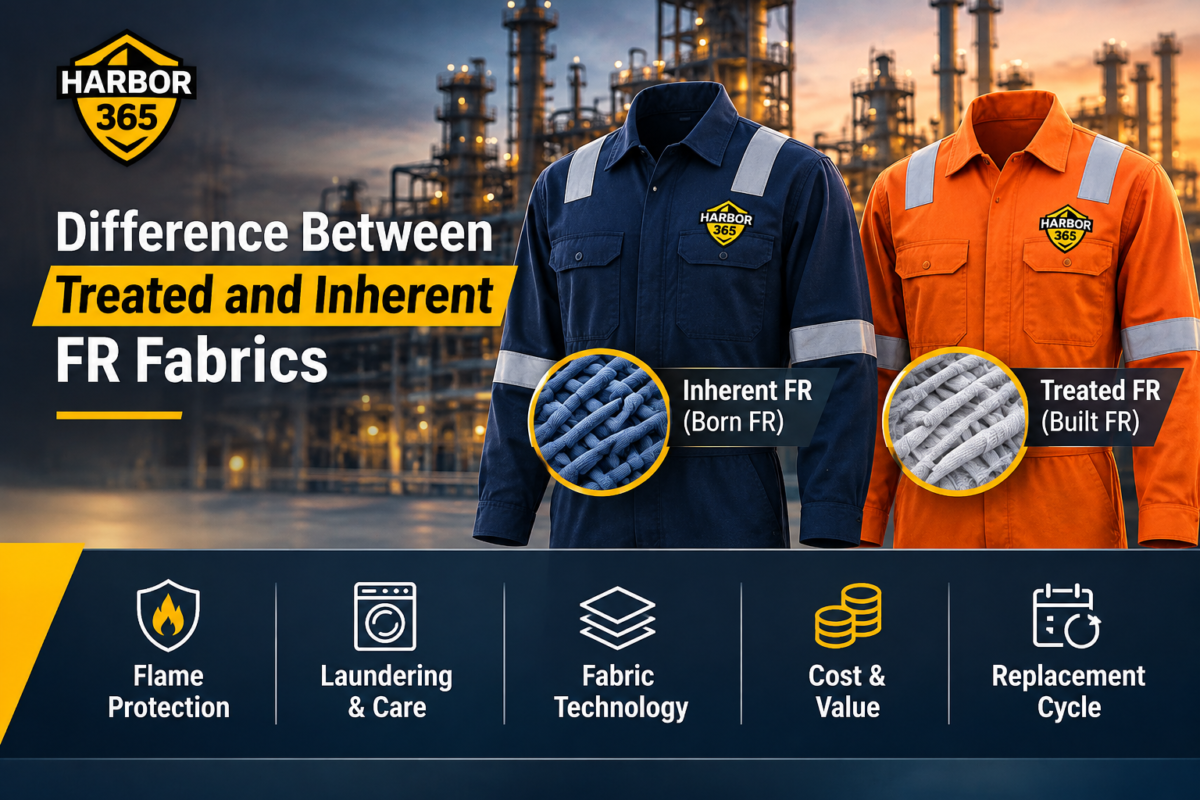
When sourcing flame-resistant (FR) protective clothing, the question isn’t just “Is it FR?” – it’s “Was it born FR, or was it built to be FR?”
Not all protective fabrics achieve flame resistance in the same way. Knowing whether a garment uses inherent or treated FR fabric can completely change how you evaluate protection limits, maintenance, comfort, and long-term cost for your workforce.
The Quick Takeaway: Born vs. Built
Think of the difference like this:
- Inherent FR (Born FR): The flame-resistant properties are part of the fiber’s molecular structure. It can never wash out, fade, or wear off. The protection lasts for the entire physical lifespan of the garment.
- Treated FR (Built FR): Starts as a non-FR fiber (like standard cotton) and receives a chemical finish to make it flame-resistant. Over time and repeated washings, the chemical treatment gradually degrades. Most treated garments are rated for 30 to 50 wash cycles before losing their compliant protection.
Inherent vs. Treated FR: Side-by-Side Comparison
| Feature | Inherent FR Fabric (Born FR) | Treated FR Fabric (Built FR) |
|---|---|---|
| How It Works | Flame resistance is woven into the DNA of the raw fibers | A flame-retardant chemical coating is applied to base fabric |
| Lifespan & Washes | Permanent. Zero risk of wash-out; lasts as long as the fabric | Limited. Typically degrades after 30 to 50 washes |
| Laundering Impact | Can be washed like standard safety gear; handles industrial laundries | Requires strict traceable washcare; |
| Primary Base Materials | Aramids and Modacrylics | 100% Cotton, Cotton/Nylon blends |
| Comfort & Feel | Lighter, highly durable; can feel slightly stiffer depending on blend | Soft, breathable, traditional cotton feel |
| Value & Procurement | Higher initial cost; lower long-term cost (fewer replacements) | Lower initial cost; requires tracking wash cycles & frequent replacements |
Understanding the Two Technologies
1. Inherent FR Fabric (Born FR)
Inherent FR fabrics are woven using engineered synthetic fibers whose flame resistance is a natural property of the fiber itself.
- The Protection Advantage: Protection cannot be washed away, stripped by harsh laundry chemicals, or worn down over time. As long as the garment isn’t ripped or heavily damaged, its safety level remains 100% intact.
- Key Considerations: Higher upfront price point, but offers peace of mind since safety managers don’t need to log laundry cycles.
2. Treated FR Fabric (Built FR)
Treated FR fabrics begin as standard textiles like soft, breathable cotton that undergo a chemical process where flame-retardant polymers bind to the fabric.
- The Wash-Out Risk: Every wash cycle gradually weakens the chemical bond. Most industry standards note that treated garments begin to lose their thermal performance after 30 to 100 washes. Additionally, using bleach, fabric softeners, or high-heat industrial washing can strip the protective chemical layer much faster.
- Invisible Hazard: When a treated garment loses its chemical barrier, it looks identical to a protected garment. This makes strict wash-cycle tracking and regular safety retirement mandatory.
Which FR Fabric Fits Your Workplace?
Neither technology is strictly “wrong,” but choosing the fabric for the possible hazard is essential.
Ask these 3 questions before buying:
How is workwear laundered at your facility? If employees wash their own uniforms or if laundry protocols vary, inherent FR eliminates the risk of accidental chemical stripping.
What is your replacement cycle budget? Treated FR has a lower purchase price, but requires replacing garments every 1–2 years as wash limits are reached. Inherent FR costs more initially, but usually delivers a lower total cost of ownership over time.
What hazard standards must be met? Verify that finished garments meet tested standards regardless of fabric type:
- EN ISO 11612: Protection against heat and flame
- NFPA 2112: Industrial flash fire protection
- IEC 61482-2: Electric arc flash protection
Make Better Sourcing Decisions
Choosing between inherent and treated FR is a balance of upfront budget, laundering controls, and garment lifespan. Knowing how flame resistance behaves over time ensures your workforce stays compliant and fully protected on every shift.
Explore the to find certified FR garments engineered for demanding industrial environments.